
List of Sources:
- Young et al., 20201
- Image generated by WordPress AI
Table of Contents:
Gravitational Potential Energy (Young et al., 2020)
Energy that is associated with the position of an object is called potential energy. For instance, a bird sitting on a cliff stores potential energy, which can then be converted to kinetic energy as the bird dives and accelerates towards the ground. The word ‘potential’ refers to the potential of work that could be done on an object. When that work is done by gravity, it is called gravitational potential energy, a potential energy related to the object’s weight and height above the ground.
Expression for Gravitational Potential Energy
Consider an object of mass m moving vertically along the y-axis (downwards). Initially, the object is at y1 and at a later time, it is at y2.
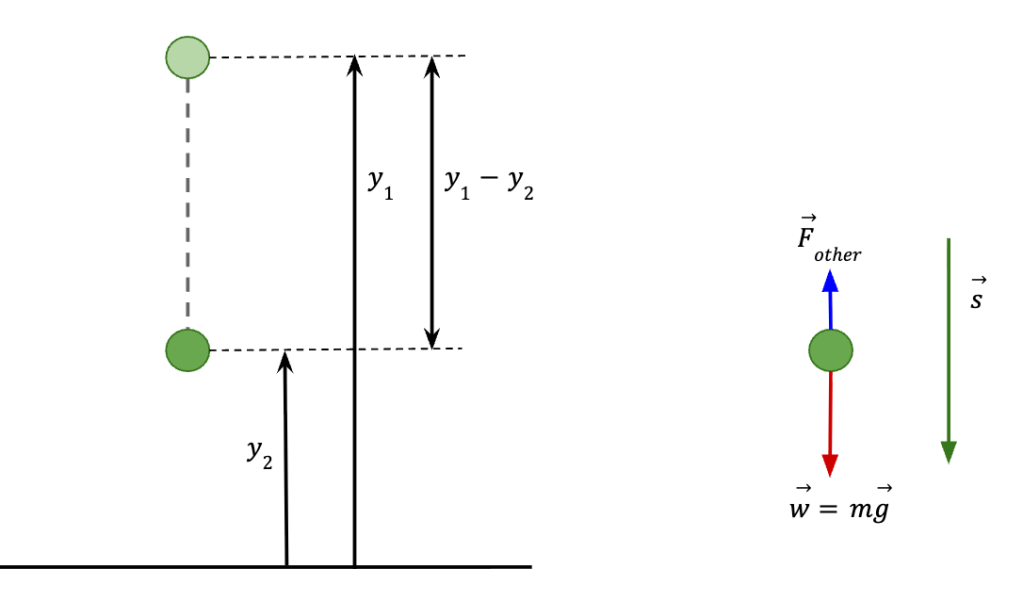
The ball is acted upon by gravitational force which is given by its weight2 (w=mg) and other resistive forces (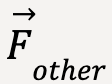 ) such as air drag. Since the weight of the object is in the same direction as the displacement, work done by gravity will be positive.
Wgrav = Fscos0° = w (y1-y2) = mgy1 – mgy2 …..(1)
If let’s say the object is moving upwards instead, such that y2 is larger than y1, then work done by gravity, Wgrav, will be negative as it should be since weight is acting in a direction opposite to the object’s displacement.
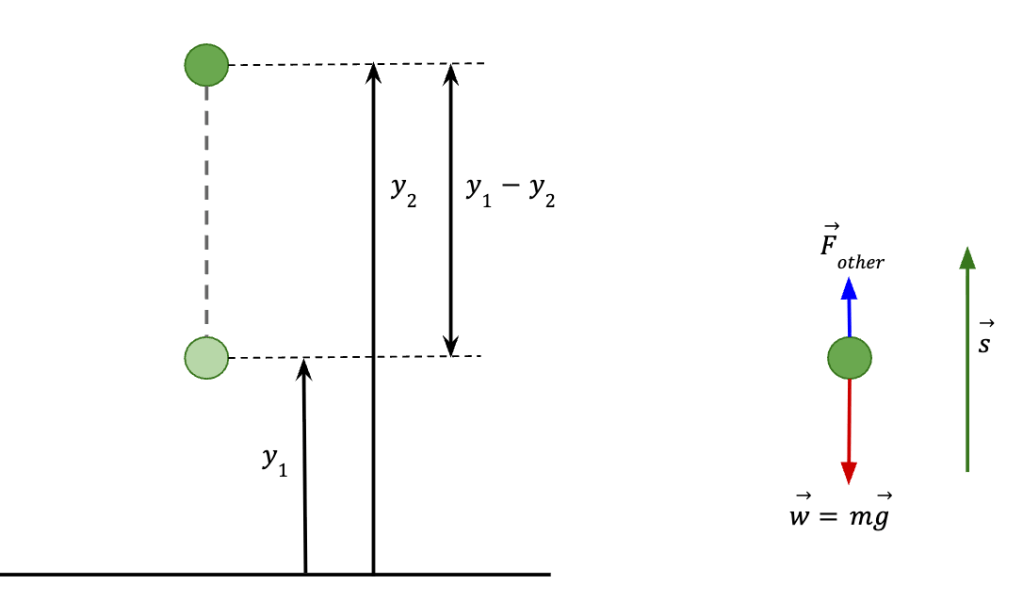
The quantity mgy is defined as gravitational potential energy, Ugrav;
Ugrav = mgy…..(2)
where m is the mass of the object, g is the acceleration due to gravity (=9.80m/s2) and y is the object’s height above the ground (or it’s y-coordinate). The SI unit of potential energy is joule (J).
This means that for an object moving vertically, the initial gravitational potential energy is given by Ugrav,1 = mgy1 and the final gravitational potential energy is equal to Ugrav,2 = mgy23.
Thus, the change in gravitational potential energy is equal to;
 …..(3)
Equation (1) can then be rewritten as;
 …..(4)
Therefore, work done by gravity is equal to the negative of the change in the gravitational potential energy.
Importance of Negative Sign
Work done by gravity is equal to the negative of change in gravitational potential energy.
This means that when an object goes upwards, work done by gravity is negative (weight acting in opposite direction to the object’s displacement), and it’s height above the ground (y) increases and so does the gravitational potential energy (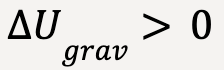 ).
).
Conversely, when an object moves downwards, work done by gravity is positive because weight acts in the same direction as the displacement. In this case, object’s height above ground and the gravitational potential energy decrease (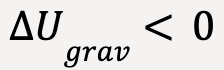 ).
).
Conservation of Total Mechanical Energy (Gravitational Forces Only)
Consider a situation where the only force acting on an object is it’s weight and 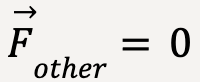 . It is moving vertically up or down, such that at y1, it has a speed of v1 and at y2, it has a speed of v2. According to work-energy theorem,
 …..(5)
Since gravity is the only force doing work on the object, using equation (4);
 …..(6)
Comparing equations (5) and (6), we get;
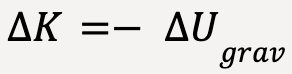 …..(7)
or
 …..(8)
Rearranging equation (8);
 …..(9)
Thus, when an object is solely under the influence of gravitational force, the total mechanical energy (the sum of kinetic and potential energies) of the system4 is conserved. The total mechanical energy is generally denoted by the letter E.
At y1, E1 = K1 + Ugrav,1 and at y2, E2 = K2 + Ugrav,2. As per conservation of total mechanical energy;
E1 = E2 = E = constant …..(10)
which means that at every point y above the ground5, E has the same value, given that gravity is the only force that does work on the object6.
For example, a cannonball shot at an angle follows a projectile trajectory. If the effects of air are negligible, the only force acting on it is the force of gravity. This would mean that at every point along its motion, the total mechanical energy (E) will be conserved (see Figure 3).
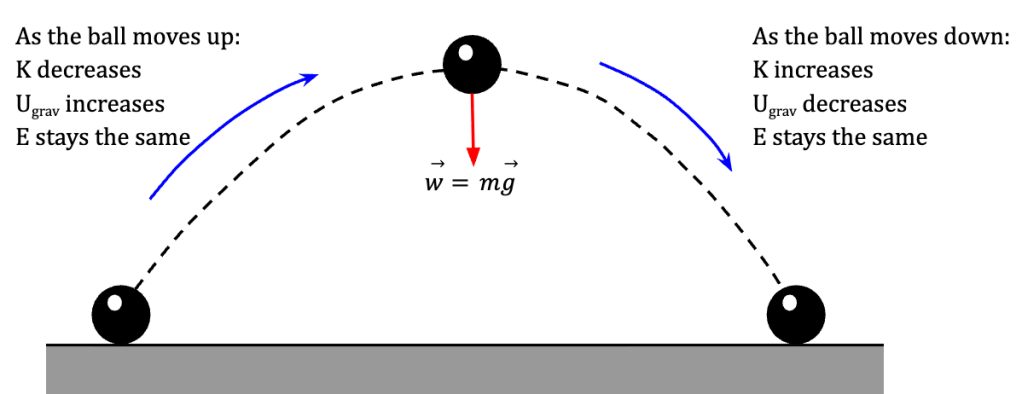
As the ball moves upwards, it’s speed starts to decrease while it’s height above ground increases. This leads to a decrease in it’s kinetic energy ( ) with an equal amount of increase in the gravitational potential energy (), resulting in total mechanical energy (E) staying the same.
When the ball starts to descend, it’s speed increases while it’s height above ground decreases. This in turn leads to an increase in it’s kinetic energy (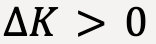 ) with an equal amount of decrease in the gravitational potential energy (), resulting in total mechanical energy (E) staying the same.
When Forces Other Than Gravity Do Work
Consider a scenario, where in addition to gravity, other forces also act on the object such that 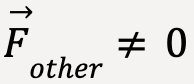 . In this case, the total work done is given by;
 …..(11)
The total work done is equal to the change in object’s kinetic energy;
 …..(12)
Substituting the expression for Wgrav as given by equation (6);
 …..(13)
Rearranging;
 …..(14)
where K1 = 1/2mv12, K2 = 1/2mv22 , Ugrav,1 = mgy1 and Ugrav,2 = mgy2.
This means that the work done by forces other than gravity is equal to the change in total mechanical energy of the system.
If Wother is positive, the total mechanical energy of the system increases and if Wother is negative, the total mechanical energy of the system decreases. Finally, if Wother = 0, the total mechanical energy of the system stays constant.
Gravitational Potential Energy for Motion Along a Curved Path
Consider a particle that travels along a curved path. It is acted on by the gravitational force given by it’s weight, 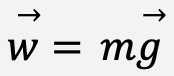 and other forces,
 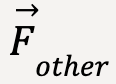 .
.
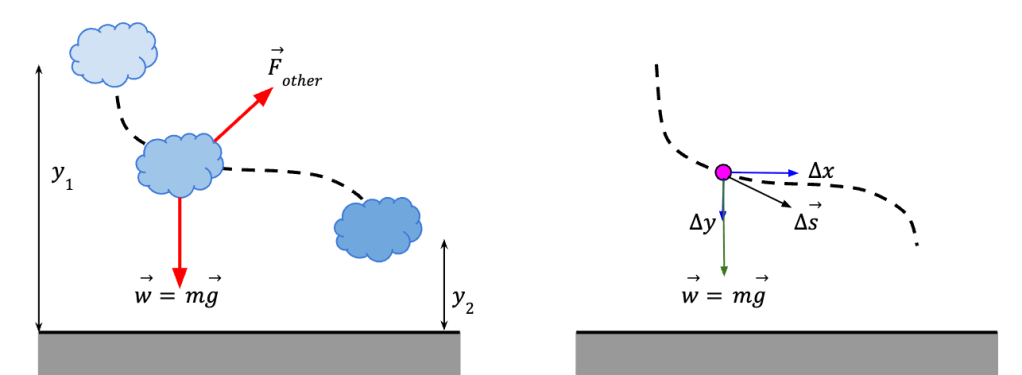
 is broken down into it’s x and y components. Gravity does work only along the vertical component of displacement given by
  (right).
Now, break the particle’s path into small displacements given by . Work done by gravity along this small displacement can be calculated by taking a scalar product of force, in this case particle’s weight, and displacement vector (taking upwards direction as positive y);
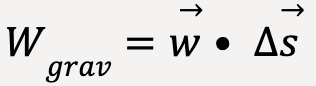 …..(15)
 …..(16)
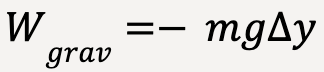 …..(17)
This means that work done by gravity is not affected by the horizontal displacement  , and is equivalent to work that would have been done had the cloud moved vertically downwards by a distance .
Since this can be said for each small displacement along the particle’s curved path, the total work done by gravity is;
 …..(18)
Thus, work done by gravity only depends on the mass (m), acceleration due to gravity (g) and the particle’s vertical displacement (y2-y1) regardless of whether the path is curved or straight7. If gravity is the only force acting on the particle, then the total mechanical energy is still conserved.
Elastic Potential Energy (Young et al., 2020)
Consider a rubber band that is stretched using external force. Just like gravitational potential energy, energy is stored in this stretched rubber band, which when released is converted into kinetic energy8. When energy is stored in an object that can change its shape, such as a spring or rubber band, it is referred to as elastic potential energy. An object is said to be elastic if it has the ability to return to it’s original form (shape and size) after undergoing deformation (such as stretching or compressing).
The Case of an Ideal Spring
An ideal spring obeys Hooke’s law, which provides a relationship between the amount of force,  required to stretch or compress a spring by a displacement x. This relationship is given by; F=kx where k is the spring constant9.
- Young, H.D. et al. (2020) Sears and Zemansky’s university physics: With modern physics. 15th edn. Boston: Pearson. ↩︎
- Assuming the weight is constant. At significantly higher altitudes, weight of an object decreases. ↩︎
- It’s a common mistake to say object’s gravitational potential energy because gravitational potential energy is a shared quantity between the object and the Earth. In other words, gravitational potential energy increases when the object moves away from the Earth or if Earth moves away from the object while the object stays at the same location. ↩︎
- The word system is used because gravitational potential energy is a shared quantity between the object and the Earth. ↩︎
- One can choose y=0 (or as referred to as ground in this case) to be wherever they like. This will change the value of gravitational potential energy (Ugrav) at points y1 and y2 but the change in gravitational potential (
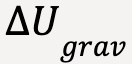 ) will stay the same. Of the two quantities, holds most significance. ↩︎
 - Total mechanical energy is still conserved if an object is acted upon by forces other than gravity as long as they do no work on the object. ↩︎
- The shape of the path is insignificant. ↩︎
- In case of gravitational potential energy, energy is stored in an object that is lifted to a certain height above the ground. However, gravitational potential energy is a shared quantity between the object and the Earth but elastic potential energy is associated with just the deformable object such as a spring. ↩︎
- There are many elastic objects that obey Hooke’s law provided that the displacement x is small. ↩︎
 Understand the cosmos